



Stainless Steel Pipe: Overview
Stainless steel pipes are widely used in industries for their strength, corrosion resistance, and aesthetic appearance. Made from a combination of iron and chromium (occasionally other metals like nickel), stainless steel pipes are available in several grades, sizes, and finishes, which qualify them for various applications ranging from plumbing to heavy industry.
Key Features of Stainless Steel Pipes:
- Corrosion Resistance: Stainless steel does not rust, corrode, or stain because of the chromium presence, which forms a protective layer on the surface. Therefore, stainless steel pipes are ideal for use in corrosive conditions like marine, chemical, and food processing conditions.
- Strength and Durability: Stainless steel pipes have great tensile strength, thus resilience under high pressure too. They can withstand extreme temperatures and mechanical stress.
- Aesthetic Appeal: Stainless steel pipes have a chic, modern appearance, usually used in embellishments such as railings, support, and architectural design.
- Flexibility: Stainless steel pipes are produced in various shapes and sizes, including round, square, and rectangular cross-sections, to enable design flexibility.
- Non-reactive with Food and Chemicals: Stainless steel is non-reactive, making it an ideal material for use in the food and beverage industries, pharmaceutical manufacturing, and chemical processing.
Common Grades of Stainless Steel Pipes:
- 304 Stainless Steel Pipe: Most commonly used for general applications, such as plumbing, kitchenware, and industrial piping.
- 316 Stainless Steel Pipe: Is noted for its superior corrosion resistance, especially in seawater (salt) environments. It is appropriate for marine, chemical, and pharmaceutical applications.
- 321 Stainless Steel Pipe: It is typically used in high-temperature application and offers excellent resistance to corrosion and oxidation.
- Duplex Stainless Steel Pipe: an alloy of both austenitic and ferritic steels with enhanced strength and corrosion resistance.
Types of Stainless Steel Pipes:
- Seamless Stainless Steel Pipes: These are manufactured without welding, which makes them stronger and more pressure-resistant. They are utilized in those applications where the pipe will be subjected to high pressure, such as in the oil and gas industry.
- Welded Stainless Steel Pipes: These are fabricated by welding two edges of a stainless steel sheet or strip. While less stronger than seamless pipes, they are cheaper and typically employed in low-pressure uses, e.g., in plumbing as well as in HVAC systems.
- ERW (Electric Resistance Welded) Stainless Steel Pipes: They are one of the categories of welded pipes, and they are made by utilizing an electric current to weld the edges of the steel. It is commonly used in pipes with smaller diameters.
- Spiral Welded Stainless Steel Pipes: They are made by taking a steel strip and welding it by spiraling it. They are utilized in industrial applications in large-diameter pipes.
- Sanitary Stainless Steel Pipes: They are specially designed to be used in applications that require a smooth, easy-to-clean surface, for example, food and drink processing.
Common Applications of Stainless Steel Pipes:
- Plumbing and Water Systems: Stainless steel tubes are employed in commercial and residential water supply systems due to their resistance to corrosion and their long life.
- Oil and Gas Industry: Stainless steel pipes are widely used to transport oil, natural gas, and other fluids, especially at high pressure.
- Food and Beverage Industry: Stainless steel is applied to food-grade pipes since it cannot react with food and beverages, and it maintains the standards of hygiene and safety.
- Chemical Processing: The chemical process relies on the utilization of stainless steel pipes in transporting aggressive chemicals because stainless steel is not corroded by the majority of acids and chemicals.
- Pharmaceuticals: The application of stainless steel pipes to transport pharmaceutical chemicals is because they are non-contaminative and facile to clean.
- Construction: Stainless steel pipes are utilized in structural applications, such as the utilization of railings, columns, and supports, due to their strength, durability, and corrosion resistance.
Advantages of Stainless Steel Pipes:
- Longevity and Durability: Stainless steel pipes have long lifespans, which translate to long-term cost savings due to their durability, wear resistance, and corrosion, as well as high-temperature resistance.
- Low Maintenance: Stainless steel is low maintenance than other materials due to its rust and corrosion resistance.
- High Resistance to Temperature Extremes: Stainless steel pipes are able to withstand extreme high and low-temperature conditions, as well as industrial processes.
- Environmentally Friendly: Stainless steel is 100% recyclable, which makes it an environmentally friendly choice for both manufacturers and end users.
- Non-Toxic: Stainless steel is not toxic, so it’s a safe option for drinking water, food processing, and pharmaceutical uses.
Example Image of Stainless Steel Pipe:
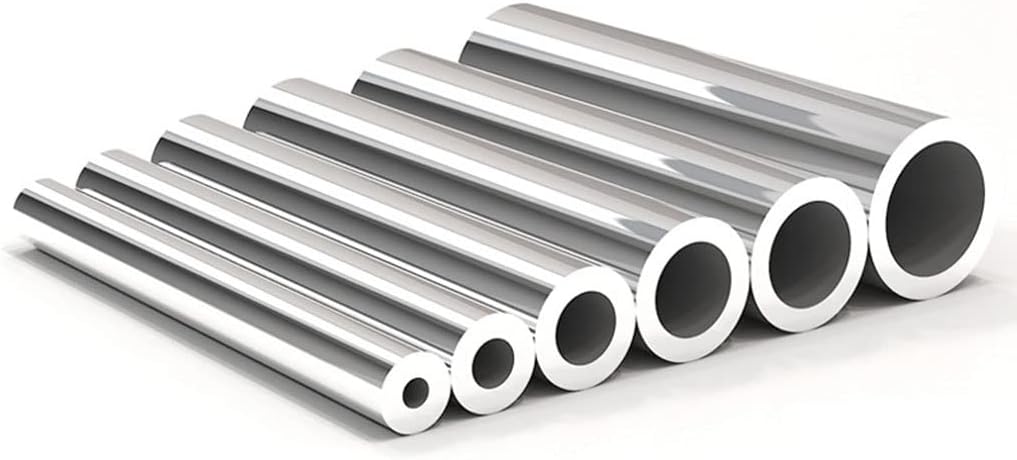
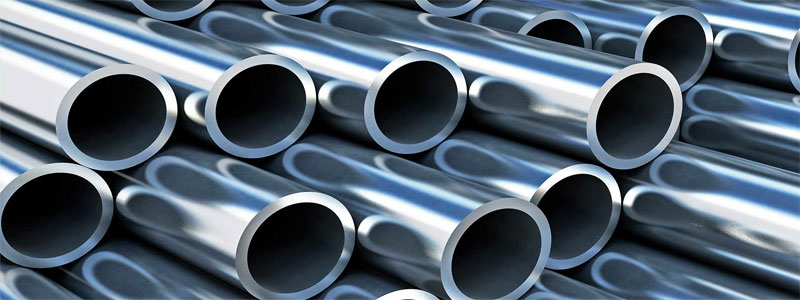
The image is of a typical stainless steel pipe that may be used in industrial, construction, or plumbing applications. The metallic, smooth surface indicates its corrosion-resistant property, and hence it can be used for both indoor and outdoor applications.
How Stainless Steel Pipes Are Manufactured:
- Casting or Rolling: The stainless steel is first cast in the form of billets, which are rolled into the desired pipe shape.
- Cold Drawing: The pipe is drawn through a die to reduce its diameter and wall thickness and improve its surface finish and strength.
- Welding (for Welded Pipes): If welded pipes are being made, the edges of steel sheets or strips are heated and welded together with electric current or other welding processes.
- Heat Treatment: The pipes are heat-treated to reduce stresses and increase mechanical properties.
- Finishing: Pipes may be surface-treated by techniques such as polishing, passivation, or pickling for corrosion resistance and enhanced appearance.
Stainless steel pipes are essential components in many industries, sought after for corrosion resistance, strength, and versatility. Whether using them in plumbing, construction, or heavy industry, stainless steel pipes offer superior performance and longevity. If you would like more information or detailed data, please let me know
STAINLESS STEEL :
ASTM A 213, ASTM A 249, ASTM A 268, ASTM A 269, ASTM A 270, ASTM A 450, ASTM A498, ASTM A 511, ASTM A554, ASTM A608, ASTM A632, ASTM A 688, ASTM A771, ASTM A778, ASTM A789, ASTM A791, ASTM A803, ASTM A826, ASTM A 826, ASTM A851, ASTM A 851, ASTM A 908, ASTM A 953, ASTM A1012, ASTM A1016, ASTM A 312, ASTM A358, ASTM A 376, ASTM A409, ASTM A426, ASTM A430, ASTM A530, ASTM A733, ASTM A790, ASTM A813, ASTM A814, ASTM A815, ASTM A 872, ASTM A928, ASTM A943, ASTM A949, ASTM A954, ASTM A960, ASTM A999, ASTM A1053
U.S.STANDARDS GRADE :
301, 304,304L, 316,316L, 316 T.I, 321, 303,309, 317, 317L, 201, 202, 316H, 304H, 321H, 309S, 310S, INCONAL600, INCONAL 800, INCONAL 825, DUPLEX, 904L, 310, HESTALLOY A-B-C, MONEL, TITANIUM, 347, 2205, 32750 , 32760, SAF 2507
UNS STANDARDS GRADE :
S20100, S20200, S30100, S30400, S30403, S30900, S31000, S31600, S31603, S31700, S31703, S32100, S34700, S31803, S32750, S32760, S32304
SAE STANDARDS GRADE :
20201, 20202, 30301, 30304, 30304L, 30309, 30309S, 30310, 30310S, 30316, 30316L, 30317, 30321, 30347
AMS STANDARD GRADE :
AMS QQ-S-763, AMS 5517, AMS 5518,AMS 5519, AMS 5901, AMS 5902, AMS 5501, AMS 5513, AMS 5560, AMS 5563, AMS 5564, AMS 5565, AMS 5566, AMS 5567, AMS 5639, AMS 5697, AMS 5857, AMS 5868, AMS 5910, AMS 5911, AMS 5912, AMS 5913, AMS AS7524, AMS T-6845, AMS T-8506, AMS 5370, AMS 5371, AMS 5511, AMS 5569, AMS 5584, AMS 5647, AMS T-6845, AMS 5523, AMS 5574, AMS 5650, AMS 7490, AMS 5521, AMS 5572, AMS 5577, AMS 5651, AMS 5524, AMS 5573, AMS 5690, AMS 5691, AMS 5507, AMS 5584, AMS 5653, AMS 5510, AMS 5557, AMS 5559, AMS 5570, AMS 5576, AMS 5645, AMS 5689, AMS AS7325, AMS 5512, AMS 5556, AMS 5558, AMS 5571, AMS 5575, AMS 5646, AMS 5654, AMS 5674, AMS 5790, AMS 5897, AMS 7490, AMS AS7229
ACI STANDARD GRADE :
CF-20, CF-16F, CF-8, CF-3, CH-29, HH, CK-20, HK, CF-8M, CF-12M, CF-3M, CF-8C
EN STANDARD :
1.4310, 1.4306, 1.4301, 1.4311, 1.4307, 1.4541, 1.4404, 1.4401, 1.4406, 1.4571, 1.4432, 1.4435, 1.4436, 1.4438, 1.4434, 1.4362, 1.4462, 1.4512, 1.4000, 1.4016, 1.4021, 1.4028, 1.4948, 1.4878, 1.4833, 1.4845, 1.4897, 1.4305, 1.4429, 1.4112, 1.4125, 1.4104, 1.4539, 1.4547
DIN STANDARD :
X5CrNi18-9, X5CrNi18-10, XCrNi19-9, X5CrNiMo17 12 2, X5CrNiMo 17 13 3, X5CrNiMo 19 11, X5CrNiMo 18 11, X6CrNiMo Ti17-12, X6CrNiTi18-10